
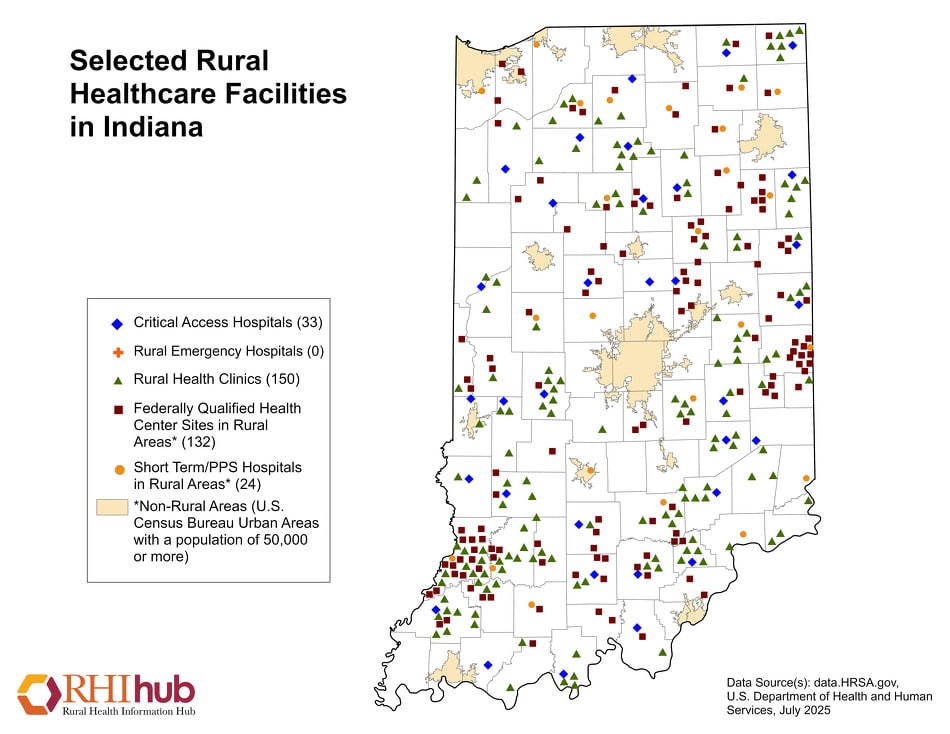
Indiana is implementing GROW: Cultivating Hoosier Health, a $1 billion, five-year federal Rural Health Transformation Program (RHTP) focused on strengthening rural healthcare delivery across Indiana. The program combines statewide system investments with regionally coordinated grant funding, giving healthcare organizations a rare opportunity to influence how care is delivered and sustained in rural communities.
This overview focuses on the regional grants, where most funding will flow and where early decisions around structure, compliance, and coordination matter most.
How RHTP Funding Is Structured
RHTP includes 12 total initiatives.
-
Initiatives 1 through 11 receive 40% of total funding and support statewide efforts such as care coordination, workforce development, interoperability, and telehealth.
-
Initiative 12 receives the remaining 60% of funding and is awarded through one regional application per area, submitted on behalf of multiple partners.
This structure requires healthcare organizations to think beyond individual projects. Leadership, partner roles, shared outcomes, and federal compliance expectations all need to be clear before an application is submitted. This is where organizations should begin looking for experienced guidance rather than trying to solve these pieces late in the process.
Statewide Initiatives
The statewide initiatives create the foundation that regional grants are expected to build on. Collectively, they focus on:
-
Coordinated patient transfers, EMS support, and hospital capacity through a statewide Medical Operations Coordination Center
-
Closed-loop community referrals through an expanded Indiana 211 system
-
Health information exchange expansion and EMR connectivity for rural providers
-
Pediatric and obstetric readiness in rural emergency departments
-
Cardiometabolic disease prevention and lifestyle medicine training
-
Medication access at hospital discharge to reduce readmissions
-
Teleconsult expansion to improve access to specialty care
-
Telehealth infrastructure and rural readiness assessment
-
Community health worker and paraprofessional workforce development
-
Rural clinical and behavioral health workforce recruitment and retention
For regional applicants, the question is not whether these initiatives exist, but how regional strategies will align with them without duplication. Organizations that take time to map statewide investments against local needs tend to submit clearer, more competitive applications, and this alignment work is central to how Burrows Consulting supports healthcare organizations pursuing complex federal funding.
Initiative 12
Initiative 12, Make Rural Indiana Healthy Again, is the primary regional funding mechanism under RHTP.
Key elements include:
-
One application per region with multiple partners
-
All eight regions expected to receive funding
-
Awards largely based on rural population size
-
Favorable consideration for strong partnerships, innovation, and sustainability
Estimated funding is approximately $15 million per year per region, with annual adjustments based on outcomes, compliance, and cross-regional collaboration.
Applications begin to separate not based on the ideas themselves, but on how clearly leaders define roles, partner responsibilities, and accountability. Healthcare organizations that have navigated complex, multi-partner federal funding before tend to recognize the value of addressing these questions early rather than revisiting them after expectations are set.
Required Focus Areas
All regional applications must address the following focus areas, with prenatal care access as a mandatory statewide priority:
-
Prenatal care access
-
Chronic disease prevention
-
Oral health quality and safety
-
Community health worker workforce
-
Telehealth alignment
-
Transportation
-
Healthcare access
-
Measurable year-by-year outcome improvement
Turning these requirements into fundable programs requires more than listing priorities. Reviewers are looking for clear connections between needs, proposed activities, outcomes, and reporting plans.
Application and Compliance Expectations
Regional applications must include:
-
A comprehensive needs assessment
-
Letters of support from partners
-
A sustainability plan beyond the grant period
-
Defined KPIs tied to RHTP priorities
-
A governance and compliance framework
Once awarded, regions must manage monthly financial reviews, quarterly programmatic reporting, and semi-annual compliance reviews. These expectations mirror other large federal healthcare grants and require systems that can scale across multiple partners.
This is where experience with federal grant compliance, reporting, and long-term execution becomes just as important as grant writing itself, and where Burrows Consulting focuses much of its work supporting healthcare organizations beyond submission.
Why Early Planning Drives Action
RHTP regional grants support long-term system change rather than one-time projects. The program adjusts funding levels annually based on performance, outcomes, and collaboration. Organizations that approach Initiative 12 as a multi-year strategy position themselves to sustain funding and reduce internal strain once awards begin.
Healthcare organizations exploring a role in an RHTP regional application often benefit from early support around strategy, compliance planning, partner coordination, and positioning. This type of work sits at the intersection of grant expertise, federal compliance, and clear communication.
Burrows Consulting supports healthcare organizations across Indiana with federal grant strategy, compliance planning, and coordination for complex, multi-partner funding opportunities like RHTP.
Organizations evaluating RHTP regional funding can connect with Burrows Consulting to clarify strategy, compliance expectations, and readiness before moving forward.
Reach out at:
0 comments to " Indiana Rural Health Transformation Program (RHTP) Overview "