
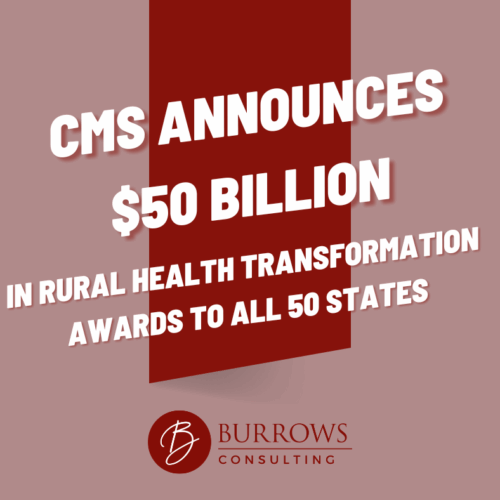
Michigan is moving into early implementation of the Rural Health Transformation (RHT) Program, a multi-year federal initiative designed to strengthen rural health systems nationwide. Through this program, Michigan will receive $173,128,201 in FY 2026, with funding distributed as part of a broader $50 billion national investment administered by the Centers for Medicare & Medicaid Services from 2026 through 2030.
Rather than focusing on the award itself, current activity centers on how the funding will be deployed and how partners can engage as implementation takes shape.
Michigan’s Early RHT Focus Areas
Following an online survey and two statewide listening sessions, the Michigan Department of Health and Human Services outlined several priority areas that will guide RHT investments:
-
Strengthening regional partnerships among rural hospitals, clinics, and community-based organizations to improve care coordination and service alignment
-
Supporting recruitment and retention of rural health professionals, behavioral health providers, and community health workers
-
Advancing technology and interoperability, including a rural technology catalyst fund to expand telehealth, remote patient monitoring, and data exchange
-
Establishing digital referral networks that connect rural residents to local health, prevention, and wellness resources
These priorities signal a strong emphasis on sustainability, coordination, and infrastructure that supports long-term rural care delivery.
Advisory Council Launch Creates Engagement Opportunity
MDHHS is also forming a Rural Health Transformation Advisory Council, creating a formal mechanism for rural providers, community organizations, tribal partners, and other stakeholders to inform implementation.
The Advisory Council will:
-
Guide engagement strategies and partner input throughout implementation
-
Provide actionable feedback to MDHHS to support responsive decision-making
Members will meet quarterly, with meetings lasting approximately 60 to 90 minutes. Selection will prioritize balanced representation across Michigan’s rural regions and key stakeholder groups.
What This Means for Rural Organizations
As Michigan’s RHTP moves from planning into execution, early awareness and strategic positioning will matter. Decisions made during this phase will influence partnership structures, funding pathways, and participation opportunities over the next several years.
Organizations serving rural communities may benefit from reviewing how their services and partnerships align with Michigan’s priorities.
Burrows Consulting is actively tracking RHTP developments across states, including Michigan, and supporting organizations as they assess readiness, positioning, and partnership strategy related to RHTP implementation.
More detailed analysis and future updates will be shared as Michigan’s RHT rollout continues.
______________________________________________________________________________
Works Cited
Centers for Medicare & Medicaid Services. Rural Health Transformation Program. U.S. Department of Health and Human Services, https://www.cms.gov.
Michigan Department of Health and Human Services. Michigan Rural Health Transformation Program. State of Michigan, https://www.michigan.gov/mdhhs.
Michigan Department of Health and Human Services. Rural Health Transformation Advisory Council Announcement.State of Michigan, https://www.michigan.gov/mdhhs.
0 comments to " Michigan Rural Health Transformation Program Updates "